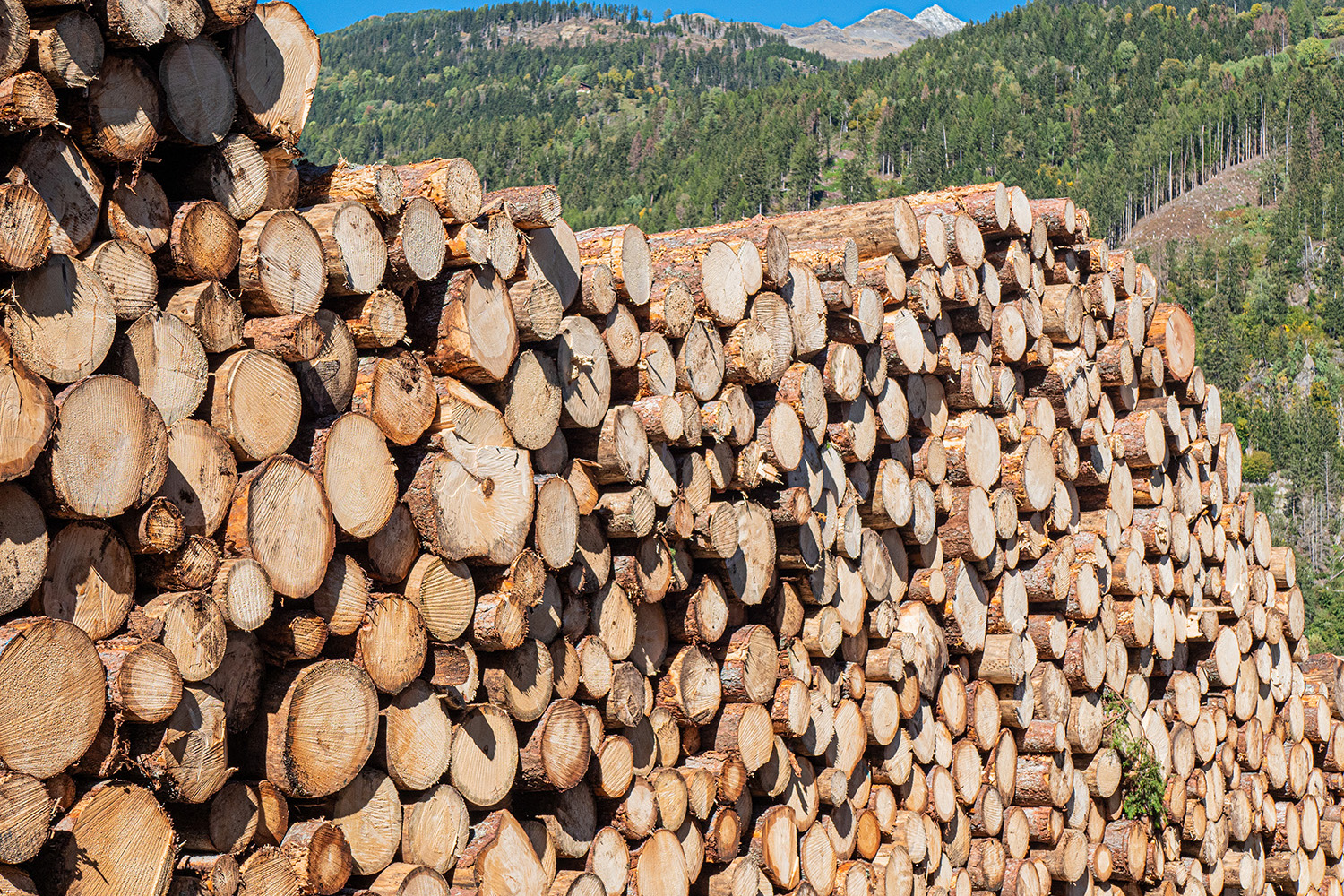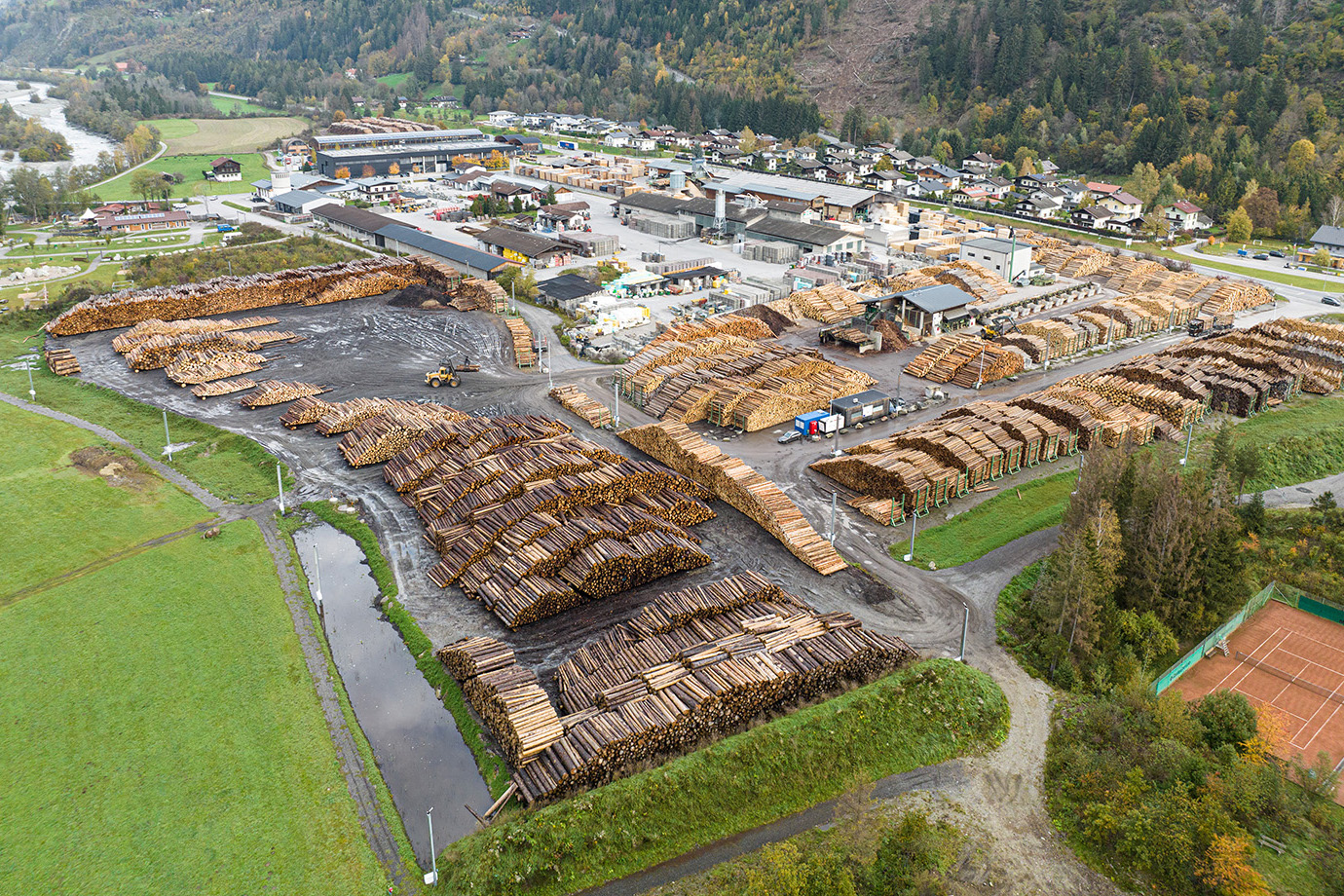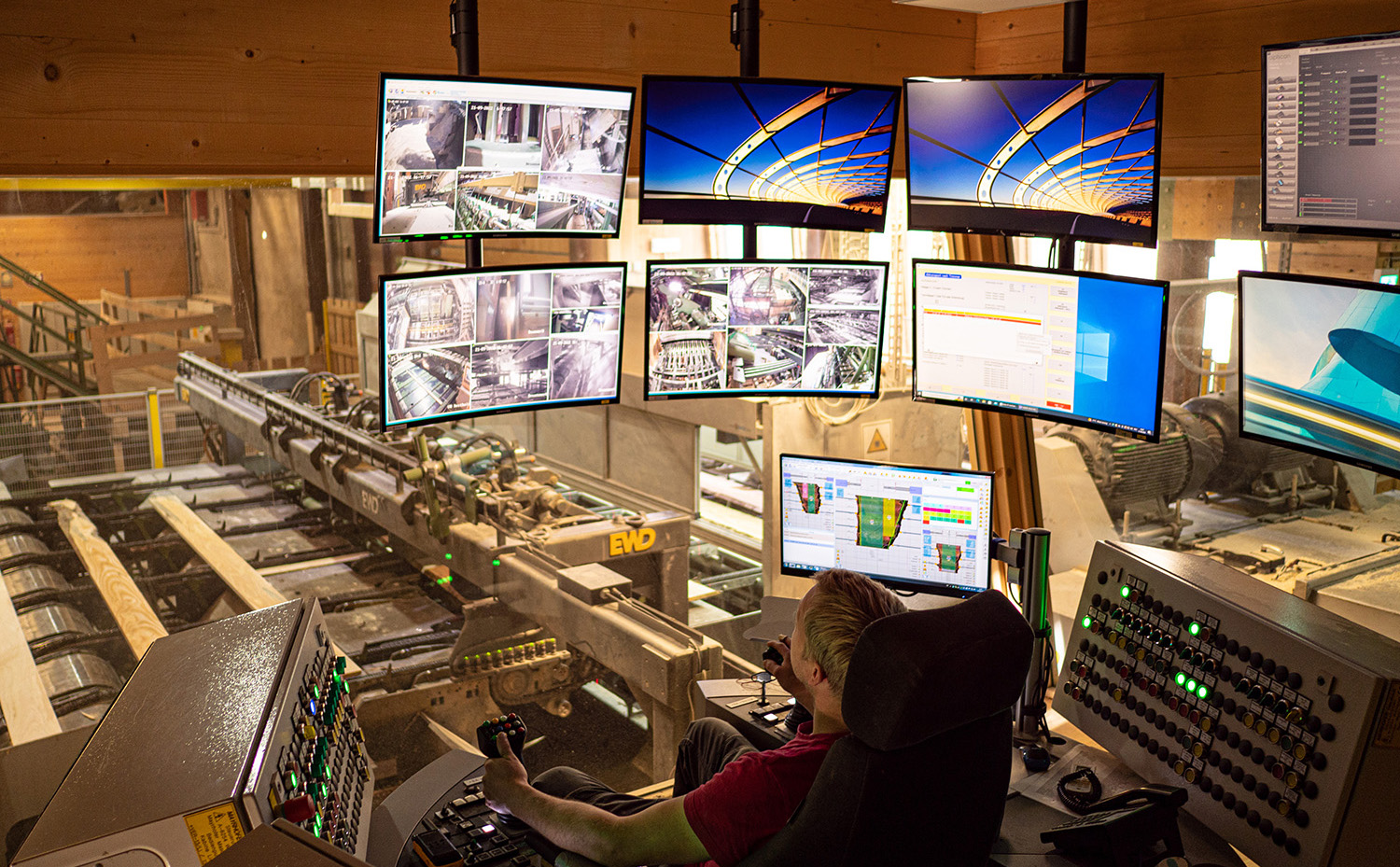
Unsere Sortimente Allgemein: Unsere Hölzer stammen aus 100% PEFC-zertifiziertem Rundholz, frei nach unserem Motto: "Natürliches Holz aus Osttirol". Die Lieferung kann entweder gelattet oder getrocknet erfolgen. Gelattet kann die Ware innerhalb von 3 Tagen und getrocknet innerhalb von 2 Wochen geliefert werden. Längen: Wir produzieren großteils Sortimente mit den Längen 4 und 4,5m. Durch unsere flexible Einschnittanlage sind jedoch auch Längen bis zu 8m möglich. Holzarten: Fichte Lärche Zirbe In den nächsten Absätzen werden die Eigenschaften und die Verwendungsmöglichkeiten dieser Holzarten näher beschrieben. Fichte: Eigenschaften: Das Holz ist weich und leicht, mit einer mittleren Dichte (darrtrocken) von 430 kg/m³, es ist mäßig schwindend und leicht zu spalten. Fichte lässt sich gut trocknen, ist gut zu bearbeiten, gut zu beizen und zu färben, aber schwer zu polieren. Witterungsbeständigkeit ist geringer als bei Tanne, empfindlich für Pilz- und Insektenbefall. Verwendung: Wichtigste Nutzholzart in Österreich; Verwendungsgebiete: Bauwesen ( KVH, Dachstühle, Holzleimbau) sowie als Bauhilfsstoff (Betonschalungen, Pölzungen, Gerüste) und der Innen- und Außenbau (Möbel, Vertäfelungen, Türen, Fenster, Treppen, Profilholz,..) Ferner wird Fichtenholz in großem Maß als Industrieholz für die Erzeugung von Zellstoff, Holzstoff, Span und Faserplatten verwendet. Lärche: Eigenschaften: Das Holz besitzt ausgezeichnete Festigkeitseigenschaften, sie sind jedoch, je nach Standort, sehr weit streuend, wie auch die Dichte des Holzes (darrtrocken) von 400 kg/m³ bis 820 kg/m³, die im Mittel bei 550 kg/m³ liegt. Lärchenholz ist gut zu trocknen und zu bearbeiten. Sie ist für alle üblichen Oberflächenbehandlungsverfahren geeignet. Hervorzuheben ist die Dauerhaftigkeit gegen Witterungseinflüsse ( besser als bei Fichte, Tanne und Kiefer) und die Langlebigkeit unter Wasser. Gegen Pilze ist die natürliche Dauerhaftigkeit gut, gegen Insekten mäßig. PEFC, Schnittholz, Bandsäge, Verwendung: Verwendungsgebiete: für hochbeanspruchte Baukonstruktionsteile und für Boots-, Brücken- und Wasserbau; im Innenausbau für Fenster und Türen, Fußböden, Silos und Gefäße für chemische Flüssigkeiten. Kein Zellstoffholz wegen geringer Faserlänge. Zirbe: Eigenschaften: Das durchschnittliche Gewicht des Holzes ist nur etwas höher als jenes der Fichte – Dichte darrtrocken 450 kg/m³; die Festigkeitseigenschaften sind mäßig gut. Das Holz ist relativ weich und feinfasrig. Das Zirbenholz ist leicht zu verarbeiten, leicht und schnell zu trocknen mit einer geringen Neigung zum Reißen; alle Oberflächenbehandlungsverfahren sind ohne besondere Schwierigkeit anwendbar, erfordern aber unter Umständen eine Entharzung. Die natürliche Dauerhaftigkeit der Kernholzes ist gut, das Splintholz ist pilz- und insektengefährdet und besonders bläueempfindlich. Verwendung: Zirbenholz wird wegen seiner leichten Bearbeitbarkeit für Holzschnitzarbeiten gerne verwendet, ebenso auch für „ Bauernstuben“ mit geschnitzten Verzierungen. Weiters wird die Zirbe auch allgemein für Möbel, Wandverkleidungen und Vertäfelungen usw. im alpenländischen Stil verwendet und für diesen Zweck auch zu furnieren verarbeitet. PEFC, Schnittholz, Bandsäge 2.) Tanne: Bezeichnung: Deutsch: Weißtanne, Edeltanne, Silbertanne Lateinisch: abies alba Englisch: Silver fir Italienisch: Waldgesellschaften: Fichten - Tannenwald Fichten - Tannen - Buchenwald Beigemischt im Buchenwald Ansprüche: Höhe: 500-2000m Wasser: mäßig frisch bis feucht Licht: Schatt bis Halbschatt Nährstoffe: mittel bis hoch Baumbeschreibung: in Österreich relativ geringen Anteil: 60,9 % Waldanteil in der Jugend zunächst spitzkegelförmig, später mehrfach schirmförmig, Äste sind quirlständig und fast waagrecht abstehend, mit stehenden Zapfen Schattholzbaum erreicht Höhen von 31 bis zu 40 m Wuchsleistung: Alter 80 bis 100 Jahre, durchschnittlicher jährlicher Gesamtzuwachs: 10 bis 18 Vorratsfestmeter/ha Merkmale des Holzes: Splint und Kernholz sind gleichfarbig gelblich-weiß; durch Lichteinwirkung gelblich -braun; ähnlich wie bei der Fichte aber oft mit grauem Schimmer bis grauviolettem Farbton. Zum Unterschied von der Fichte sind keine Harzkanäle vorhanden; Früh und Spätholz meist deutlich abgegrenzt. Geruch des frischen Holzes nicht harzig wie bei Fichte, sondern säuerlich ( insbesondere beim pathologischen Nasskern). Mitunter ist ein dunkler „Nasskern“, der einen Feuchtigkeitsgehalt bis zu 160% aufweist, vorhanden. Tannenäste weisen eine größere Härte und eine dunklere Färbung auf als Fichte, sind rund und mitunter von schwarzen Ringen umgeben, die ein Herausfallen aus dem Brett verursachen. Eigenschaften: Das Holz ist relativ leicht, mit einer mittleren Dichte (darrtrocken) von 410 kg/m³. Tannenholz besitzt ein gutes Stehvermögen ( ist das Verhalten des Holzes in seinen Abmessungen und Form gegenüber wechselndem Umgebungsklima) und schwindet mäßig. Die Festigkeitswerte unterscheiden sich nicht wesentlich von jenen der Fichte. Alle Oberflächenbehandlungsverfahren sind gut anwendbar. Tannenholz ist besonders leicht spaltbar allerdings auch leicht splitternd und astiger, deswegen weniger gut bearbeitbar als Fichte. Tanne lässt sich gut trocknen, bei mit Fichte gemischten Trocknungschargen ist oft ein Nachtrocknen der Tanne (wegen Nasskern) erforderlich, aus diesem Grund wird sie im Holzleimbau gemieden. Tanne ist witterungsbeständiger als Fichte, besonders in ständiger Feuchtigkeit, weist aber auch eine geringe Widerstandsfähigkeit gegen Insekten und Pilze (bläueempfindlich) auf. Das Holz weist eine bemerkenswerte Beständigkeit gegenüber Säuren und Alkalien auf. PEFC, Schnittholz, Bandsäge, Verwendung: Im allgemeinen wird die Tanne wie die Fichte verwendet. Verwendungsgebiete: Die Tanne wird besonders dort bevorzugt verwendet, wo der Harzgehalt der Fichte unerwünscht wäre oder die bessere Imprägnierbarkeit der Tanne ausgenützt werden soll. Verwendung zu Behältern für chemische Flüssigkeiten, Milchgefäße; weiteres spezielles Einsatzgebiet Wasser- und Erdbau; Ähnliche Hölzer: Fichte ====== Generally: Our woods originate from 100% PEFC certified round timber, freely after our slogan: "natural wood from Osttirol". The supply can take place either gelattet or dried. Gelattet can be supplied the commodity within 3 days and dried within 2 weeks. Lengths: We produce majority assortments with the lengths 4 and 4,5m. By our flexible cut plant however also lengths up to 8m are possible. Wood: Spruce larch Zirbe In the next paragraphs the characteristics and the ranges of application of these wood are more near described. Spruce: Characteristics: The wood is soft and easy, with a middle density (darrtrocken) of 430 kg/m³, it is moderately shrinking and easy to split. Spruce can be dried well to work on is good to pickle and color well, but to polish with difficulty. Weather proofness is smaller than sensitive with fir, for mushroom and insect attack. Use: Most important utilizable wood in Austria; Verwendungsgebiete: Building industry (KVH, roof framings, glued timber construction) as well as building auxiliary material (concrete shutterings, Poelzungen, stands) and the interior and external's building (furniture, vertaefelungen, doors, window, stairs, profiled wood..) Furthermore fir wood in large measure is used as industrial wood for the production of cellulose, mechanical pulp, splinter and fiber boards. Larch: Characteristics: The wood possesses excellent physical properties, is however, depending upon location, very far strewing it, as also the density of the wood (darrtrocken) of 400 kg/m³ to 820 kg/m³, which is on the average with 550 kg/m³. Larch wood is good to dry and work on. It is suitable for all usual surface treatment procedures. To emphasize the durability against influences of the weather (better than with spruce, fir and Kiefer) and the longevity under water are. Against mushrooms the natural durability is well, moderate against insects. PEFC, lumber, belt saw, Use: Verwendungsgebiete: for highly stressed building construction parts and for boat -, bridging and hydraulic engineering; in the interior fittings for windows and doors, floors, silos and containers for chemical liquids. No zellstoffholz because of small faserlaenge. Zirbe: Characteristics: The average weight of the wood is only somewhat higher than that one the spruce. Density darrtrocken 450 kg/m³; the physical properties are moderately good. The wood is relatively soft and feinfasrig. The Zirbenholz is easy to convert, easily and fast to dry with a small inclination to tearing; all surface treatment procedures are applicable without special difficulty, require a Entharzung however sometimes. The natural durability that of heartwood is good, the splintholz is mushroom and insect-endangered and particularly blue-sensitively. Use: Zirbenholz because of its easy workability for wood carving work gladly used, just as also for. Farmer rooms with carved ornaments. Further the Zirbe is also generally used for furniture, wall linings and vertaefelungen etc. in the alpine style and converted for this purpose also to veneers. PEFC, lumber, belt saw 2.) fir: Designation: German: White fir, edeltanne, silver fir Latin: abies alba English: Silver fir Italian: Forest companies: Spruces - fir forest spruces - firs - beech forest added in the beech forest Requirements: Height: 500-2000m water: moderately freshly to damp light: Schatt to Halbschatt of nutrients: means to high Description of tree: in Austria relatively small portion: 60,9 % forest portion in the youth first pointed-conically, later several times schirmfoermig, branches is quirlstaendig and nearly horizontally distant, with standing tap Schattholzbaum reaches heights of 31 up to 40 m stature achievement: Stature achievement: Old 80 to 100 years, average annual total increase: 10 to 18 Vorratsfestmeter/ha Characteristics of the wood: Split pin and heartwood are equivalent yellowish-white; by influence of light yellowish brown; similarly as often with the spruce however with grey glow to grey-violet colour. To the difference of the spruce no resin channels are present; Early and spaetholz usually clearly defined. Smell of the fresh wood not harzig as saeuerlich with spruce, but (in particular with the pathological wet core). Every now and then a dark Nasskern., which exhibits a moisture content up to 160%, is present. Fir branches exhibit a larger hardness and a darker colouring than spruce, are round and every now and then by black rings surrounded, which cause a falling out of the board. Characteristics: The wood is relatively easy, with a middle density (darrtrocken) of 410 kg/m³. Fir wood possesses a good durability (the behavior of the wood in its dimensions and form is in relation to changing environment climate) and shrinks moderately. The mechanical properties differ not substantially from those the spruce. All surface treatment procedures are well applicable. Fir wood is particularly easily fissile however also easy splintering and more astiger, therefore less well machinably than spruce. Fir can be dried well, with drying loads mixed with spruce is often a Nachtrocknen of the fir (because of wet core) necessary, for this reason it in the glued timber construction is avoided. In addition, fir is weather-proof than spruce, particularly in constant humidity, exhibits a small ruggedness against insects and mushrooms (blue sensitive). The wood exhibits a remarkable stability opposite acids and alkalis. PEFC, lumber, belt saw, use: Generally the fir is used like the spruce. Verwendungsgebiete: The fir is preferentially used particularly, where the harzgehalt of the spruce would be unwanted or the better impregnation barness of the fir was to be used. Use to containers for chemical liquids, milk containers; further special operational area water and earthwork; Similar woods: Spruce ============= Generalità: I nostri legno provengono da 100% PEFC certificato intorno a legname, liberamente dopo il nostro slogan: "legno naturale da Osttirol". Il rifornimento può avvenire gelattet o si è asciugato. Gelattet può essere fornito il prodotto in 3 giorni ed essere asciugato in 2 settimane. Lunghezze: Produciamo gli assortimenti di maggioranza con le lunghezze 4 e 4,5m. Nostra dalla pianta flessibile del taglio tuttavia inoltre le lunghezze fino ad un massimo di 8m sono possibili. Legno: Larice spruce Zirbe Nei paragrafi seguenti le caratteristiche e le gamme di applicazione dei questi legno vicino sono descritte. Abeti rossi: Caratteristiche: Il legno è molle e facile, con una densità centrale (darrtrocken) di 430 kg/m³, è moderatamente shrinking e facile da spaccare. Gli abeti rossi possono essere asciugati bene per funzionare sopra sono buoni da marinare bene e colorare, ma da lucidare con la difficoltà. Il proofness del tempo è più piccolo di sensibile con abete, per l'attacco dell'insetto e del fungo. Uso: La maggior parte del legno utilizzabile importante in Austria; Verwendungsgebiete: Edilizia (KVH, framings del tetto, costruzione incollata del legname) così come il materiale ausiliario della costruzione (shutterings concreti, Poelzungen, basamenti) e la costruzione interna ed esterna (mobilia, vertaefelungen, portelli, finestra, scale, legno profilato.) Ancora il legno dell'abete è usato in una larga misura come legno industriale per la produzione di cellulosa, di polpa meccanica, della scheggia e dei cartoni di fibra. Larice: Caratteristiche: Il legno possiede le proprietà fisiche eccellenti, è tuttavia, dipendendo dalla posizione, molto lontano spargente lo, come anche la densità del legno (darrtrocken) di 400 kg/m³ - 820 kg/m³, che è in media con 550 kg/m³. Il legno del larice è buono da asciugarsi e funzionare sopra. È adatto a tutte le procedure di superficie usuali di trattamento. Dare risalto alla durevolezza contro le influenze del tempo (migliore di con gli abeti rossi, l'abete e Kiefer) e della longevità sotto acqua sia. Contro i funghi che la durevolezza naturale è bene, moderi contro gli insetti. PEFC, legname, sega della cinghia, Uso: Verwendungsgebiete: per le parti altamente sollecitate della costruzione di edifici e per la barca -, gettando un ponte ed ingegneria idraulica; nei montaggi interni per le finestre ed i portelli, i pavimenti, i sili ed i contenitori per i liquidi chimici. Nessuno zellstoffholz a causa di piccolo faserlaenge. Zirbe: Caratteristiche: Il peso medio del legno è soltanto piuttosto superiore a quell'gli abeti rossi. La densità darrtrocken 450 kg/m³; le proprietà fisiche sono moderatamente buone. Il legno è relativamente molle e feinfasrig. Lo Zirbenholz è facile da convertirsi, facilmente e veloce asciugarsi con una piccola inclinazione allo strappo; tutte le procedure di superficie di trattamento sono applicabili senza difficoltà speciale, richiedono un Entharzung tuttavia a volte. La durevolezza naturale che di heartwood è buona, lo splintholz è fungo ed insetto-messo e particolarmente blu-sensibile. Uso: Zirbenholz a causa del relativo workability facile per lavoro di scultura del legno usato felice, appena come anche per. Stanze del coltivatore con gli ornamenti intagliati. Più ulteriormente lo Zirbe inoltre generalmente è usato per mobilia, i rivestimenti della parete ed il vertaefelungen ecc. nello stile alpino ed è convertito a questo fine inoltre in impiallacciature. PEFC, legname, sega della cinghia 2.) abete: Indicazione: Tedesco: Abete bianco, edeltanne, Latino d'argento dell'abete: inglese alba dei abies: Italiano d'argento dell'abete: Aziende della foresta: Attilla - abeti rossi della foresta dell'abete - gli abeti - foresta del faggio aggiunta nella foresta del faggio Requisiti: Altezza: acqua di 500-2000m: moderatamente di recente inumidire luce: Schatt a Halbschatt delle sostanze nutrienti: mezzi al high Descrizione dell'albero: in Austria parte relativamente piccola: 60.9 % della parte nella gioventù in primo luogo aguzza-conically, più successivamente schirmfoermig di parecchie volte, rami della foresta sono quirlstaendig e quasi orizzontalmente distante, con il colpetto levantesi in piedi Schattholzbaum raggiunge lle altezze di 31 successo di altezza di fino a 40 m.: Successo di altezza: Vecchi 80 - 100 anni, aumento totale annuale medio: 10 - 18 Vorratsfestmeter/ha Caratteristiche del legno: Il perno ed il heartwood spaccati sono giallastro-bianco equivalente; da influenza di colore marrone giallastro chiaro; similmente come spesso con gli abeti rossi tuttavia con incandescenza grigia a colore grigio-viola. Alla differenza degli abeti rossi non ci sono scanalature della resina presenti; Presto e spaetholz definito solitamente chiaro. Odore del harzig fresco di legno non come saeuerlich con gli abeti rossi, ma (in particolare con il nucleo bagnato patologico). Di tanto in tanto un Nasskern. scuro, che esibisce un tenore d'acqua fino al 160%, è presente. I rami dell'abete esibiscono una più grande durezza e un colouring più scuro che spruce, sono rotondi e di tanto in tanto dagli anelli neri circondati, che causano cadere dalla cartolina. Caratteristiche: Il legno è relativamente facile, con una densità centrale (darrtrocken) di 410 kg/m³. Il legno dell'abete possiede una buona durevolezza (il comportamento del legno nelle relative dimensioni e forma è rispetto al clima cambiante dell'ambiente) e ristringe moderatamente. Le proprietà meccaniche differiscono da non sostanzialmente da quelle gli abeti rossi. Tutte le procedure di superficie di trattamento sono bene applicabili. Il legno dell'abete è facilmente specialmente tuttavia anche scheggiarsi facile fissile e più astiger, quindi di meno bene machinably che spruce. L'abete può essere asciugato bene, con i carichi di secchezza mescolati con gli abeti rossi è spesso un Nachtrocknen dell'abete (a causa del nucleo bagnato) necessario, per questo motivo che nella costruzione incollata del legname è evitato. In più, l'abete è resistente all'intemperie che spruce, specialmente nell'umidità costante, esposizioni una piccola irregolarità contro gli insetti e funghi (sensibile blu). Il legno esibisce una stabilità notevole di fronte agli acidi ed agli alcali. PEFC, legname, sega della cinghia, uso: L'abete è usato In generale come gli abeti rossi. Verwendungsgebiete: L'abete è usato preferenzialmente specialmente, dove il harzgehalt degli abeti rossi sarebbe indesiderabile o il barness migliore di impregnazione dell'abete doveva essere usato. Uso ai contenitori per i liquidi chimici, contenitori del latte; ulteriori acqua e sterro operativi speciali di zona; Legno simili: Abeti rossi